

Luckin Coffee is a new leading retail coffee company in China. Pioneering new technology-driven retail model, Luckin Coffee aims to provide high quality coffee and products with great affordability, and convenience to their customers. Their coffee beans come directly from top coffee producing regions, and they have won the gold medal of IIAC for five consecutive years. Every batch of their coffee is carefully blended by their team of the WBC champions. Their coffee is selected from more than 180 blending formulas that highly matches the taste of customers. They advocate a more convenient and rapid “new retail” experience. Users can purchase, pick up and take out coffee through their mobile app, completely changing the traditional coffee business mode. Customers can experience the ultimate convenience with every cup of coffee carefully crafted and freshly made, just for them. Their mobile app and presence on other third-party platforms cover the entire customer purchase process, offering their customers a 100% cashier-less environment. This enhances their customer experience, improves their operating efficiency, and allows them to stay connected with their customers and engage with them anytime, anywhere.
Luckin Coffee’s Launch
⬇️China’s Luckin Coffee, a well-known coffee chain, launches its business in 2017.
Trademark Application by 50R Group
⬇️50R Group, a local entity in Thailand, applies to register the Luckin Coffee trademark with Thailand’s Intellectual Property Office. This move is strategic.
Discovery of Trademark Registration
⬇️China’s Luckin Coffee discovers that its trademark has been registered by 50R Group in Thailand. This revelation likely prompts Luckin Coffee to take legal action, as the registration of its mark by a third party poses a significant threat to its brand identity in the Thai market.
Legal Action by China’s Luckin Coffee
⬇️China’s Luckin Coffee initiates legal proceedings against various parties in Thailand, including 50R Group, alleging trademark infringement. The basis of the legal claim is likely centered on the unauthorized use of the Luckin Coffee trademark, which was already associated with the Chinese brand.
In the legal dispute over trademark infringement between China’s Luckin Coffee and 50R Group in Thailand, Luckin Coffee likely advanced a multifaceted set of claims to substantiate its case. At the core of its arguments, Luckin Coffee probably asserted that 50R Group had deliberately and without authorization incorporated the Luckin Coffee trademark into its operations within Thailand. This contention likely extended to an assertion of the likelihood of confusion among consumers, emphasizing that 50R Group’s use of the Luckin Coffee trademark could lead to a misperception of an association with the renowned Chinese coffee chain. A further significant aspect of Luckin Coffee’s allegations might have concerned potential damage to the brand’s image, implying that the actions of 50R Group might cause harm to the established goodwill and reputation of the Luckin Coffee brand. In addition, Luckin Coffee might have emphasised registration and priority issues, claiming pre-existing rights to the trademark and suggesting that 50R Group registered the trademark in Thailand dishonestly or with the intention of profiting from Luckin Coffee’s well-established reputation in China. In addition to possibly requesting court-issued cease and desist orders, the legal proceedings probably sought remedies like the cancellation of 50R Group’s trademark registration in an effort to swiftly put an end to any further unauthorised use of the Luckin Coffee trademark by 50R Group within the jurisdiction.
The court proceedings in the trademark infringement dispute between 50R Group in Thailand and Luckin Coffee, a Chinese company, followed a sequence of events. At first, Luckin Coffee filed a lawsuit in Thailand accusing 50R Group and other parties of violating its trademark. Later, the Thai Central Intellectual Property and International Trade Court ruled in favour of China’s Luckin Coffee in a first-instance decision. It’s possible that the court issued orders to terminate 50R Group’s pertinent trademark registration and to stop using it. But in the same year, 50R Group filed an appeal of the ruling, prolonging the legal dispute. The court reopened the case to allow for a reexamination of the dispute. The reopened matter is still outstanding, and the court case has not yet come to a close. The complexity of international trademark conflicts is brought to light by this ongoing case, which also emphasises how crucial it is for companies entering foreign markets to register their trademarks in a timely and strategic manner.
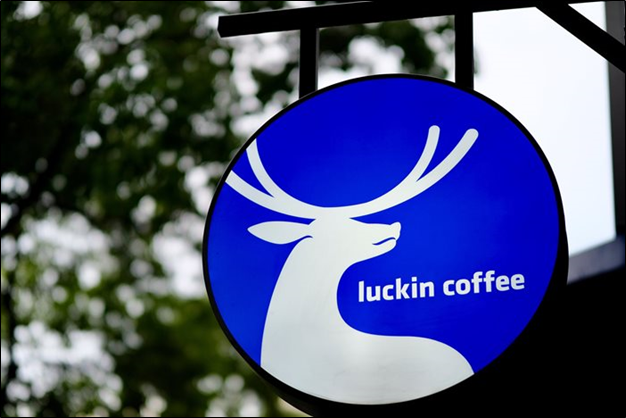
Image showing a board with the luckin coffee logo in China
The ongoing trademark infringement lawsuit in Thailand between 50R Group and Luckin Coffee is taking place in the context of complex and wide-ranging ramifications that could change both companies’ operational strategy and the competitive environment. The legal dispute poses a serious threat to Luckin Coffee’s hard-earned reputation as a brand, thus the stakes are very high. Consumer trust may be damaged by the impression of being involved in a trademark battle because doubts about the legitimacy and longevity of the brand may arise. Beyond immediate damage to its reputation, Luckin Coffee faces additional operating issues. The legal proceedings need a calculated reallocation of resources, diverting finances and focus away from marketing campaigns and prospective growth strategies in order to cover legal costs. Another factor to take into account is the possibility of increased market competition, as competing companies may try to take advantage of the ambiguity surrounding Luckin Coffee’s trademark status in Thailand in order to gain market share and erode its competitive position.
On the other hand, 50R Group faces a variety of difficulties. Because of the ongoing trademark battle, customers may doubt the authenticity and uniqueness of 50R Group’s offerings, jeopardising the company’s credibility and reputation. Business disruptions become a real concern, and there’s always the possibility of court-mandated branding or operational modifications. The financial ramifications of legal disputes are significant for 50R Group because they not only involve legal expenses but also carry the risk of damages in the event of an adverse verdict, which might negatively affect the company’s overall financial standing.
The conclusion of the legal procedures will have a significant impact on the market positions and operating landscapes of 50R Group and Luckin Coffee in Thailand, going beyond simple legal decisions. This case acts as an example, establishing a standard that may have an impact on many industries as foreign companies consider their approaches to trademark protection when they join the foreign market. The impact of the disagreement on consumer trust and impression is a crucial aspect that both corporations need to proactively manage, even beyond its legal intricacies. Essentially, the dispute concerning trademark infringement goes beyond the courtroom and affects Luckin Coffee and 50R Group’s market positioning and competitive dynamics in the intricate and changing Thai market.
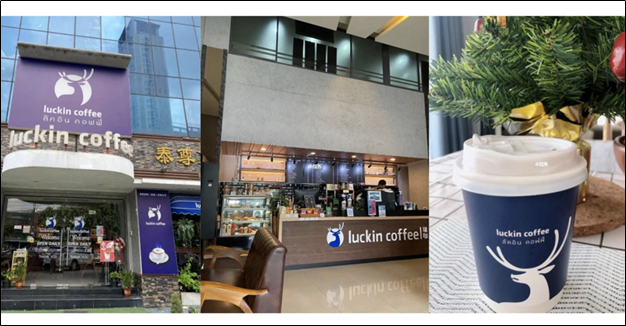
Image showing the outlet and cup of luckin coffee in Thailand
The trademark dispute between 50R Group-operated Luckin Coffee in Thailand and China is based on subtle variations in their respective logos. In particular, the deer faces in different directions on the logos: the deer on Thailand’s Luckin Coffee is facing left, while the deer on China’s Luckin Coffee is facing right. These distinctions most likely were crucial in determining each brand’s uniqueness in the legal arguments. It’s possible that the deer’s orientation was stressed as a key component in setting the logos apart and avoiding customer confusion. Legal discussion could include consumer perception, assessing whether the deer’s orientation matters in terms of each logo’s overall visual impression. Arguments may also centre on the rationale for trademark registration, evaluating if any resemblances were deliberate attempts to capitalise on China’s well-known Luckin Coffee. In the end, these logo variations have legal ramifications that go beyond aesthetics and touch on issues like consumer awareness, likelihood of confusion, and general intellectual property protection in a competitive marketplace.
The case illustrates how trademark protection is geographically specific. Businesses must proactively apply for trademark registration in each jurisdiction where they seek protection, as trademarks are granted on a country-by-country basis. In the case of Luckin Coffee, the company’s failure to register its trademark in Thailand allowed 50R Group, a third party, to register the identical mark. Once a trademark is registered by a third party, it becomes the intellectual property of that entity and is difficult for the original owner to reclaim. This can have serious ramifications for companies that overlook the value of timely trademark registration while expanding internationally. The most significant point to be learned from this case is how crucial timing is when registering a trademark, particularly for companies entering international markets. Delayed trademark registration in Thailand caused problems even for a renowned company such as Luckin Coffee.
Early trademark registration is essential for business owners looking to expand into international markets. Postponing trademark registration until after entering a new market may result in legal issues and the loss of brand recognition. As the Luckin Coffee case demonstrates, “time is of the essence” when it comes to trademark protection. The Thai trademark infringement case against Luckin Coffee is a sobering reminder of how complex international trademark protection is. Businesses need to make timely trademark registration a top priority in any jurisdiction where they want to operate in order to protect their brands. An early trademark registration can avert legal problems later on in the competitive global market.
Disclaimer: The information provided above is for informational purposes only and should not be considered as legal advice.
Comments are closed