
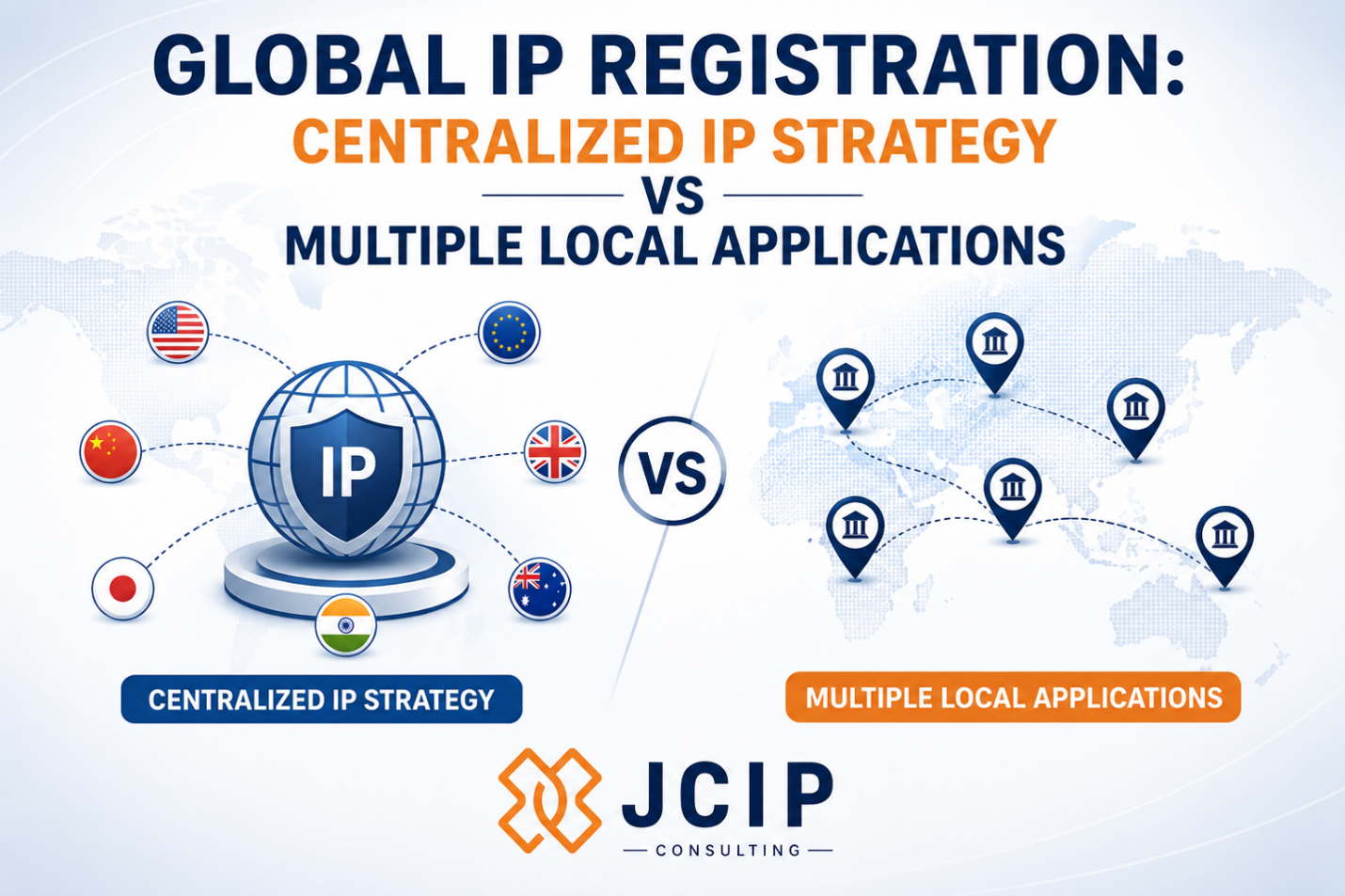
Most businesses expanding abroad get stuck on the same decision: file everything through one centralized system, or handle applications country by country. It feels like a fork in the road, and nearly every piece of advice out there treats it that way, pushing you to pick a side. But that framing misses the actual problem.
The real question isn’t which mechanism to use for global IP registration. It’s about the order to file in, because a business can use a centralized route for some markets and go local for others within the same expansion plan and still get the outcome badly wrong if the sequence is off.
This distinction matters more than it sounds. Businesses don’t usually lose trademarks because they picked the “wrong” filing mechanism. They lose them because they filed in the right market too late, after someone else already had.
Search around for advice on international IP registration, and you’ll find the same setup everywhere:
None of this is wrong, exactly, but it treats expansion as a single decision made once, rather than a sequence of decisions made over time as a business actually grows. In practice, a business rarely expands into every market at once. It moves in stages, often starting close to home before pushing further out. The filing mechanism matters less than when each market gets addressed relative to that growth. Get the sequence right, and both centralized and local filing routes can work well together. Get it wrong, and the mechanism you chose won’t save you.
Instead of guessing which market to prioritize, it helps to actually score your situation. For every target market on your roadmap, run it through these four questions and give it one point for each “yes”:
A market scoring three or four points should move to the front of your filing sequence, often ahead of markets that feel more commercially important on paper. A market scoring one or zero can usually wait without meaningful risk. This is the actual work behind a sound IP portfolio strategy, weighing exposure market by market rather than treating the whole expansion as one flat decision.
Geography does real work here too, not just as a talking point but as part of the sequencing logic itself. Malaysia’s position within ASEAN makes it a natural starting point for businesses planning to expand across Singapore, Indonesia, Thailand, and Vietnam. Treating the whole region as one uniform bloc, though, is where a lot of expansion plans go wrong.
A few differences worth building into your sequence:
None of this means one country matters more than another. It means the order they’re addressed in should reflect how each system actually behaves, not just how big or attractive the market looks from the outside.
The Apple and Proview dispute over the iPad trademark in China gets referenced constantly in IP content, usually as a generic warning about “why filing matters.” That framing undersells what actually happened.
Apple ended up paying a reported $60 million to settle the dispute, a cost that traces directly back to sequencing, not to which filing mechanism was chosen. That’s the same exposure any growing business faces when expansion outpaces the protection built behind it.
None of this means centralized filing or local applications are inherently better choices. Both have a place, and the right answer usually involves a mix of the two depending on where a business is expanding and how fast. What actually protects a brand is treating IP protection for expanding businesses as an ongoing sequencing exercise, revisited as the roadmap changes, rather than a single filing decision made early and left alone.
That kind of planning is where JCIP Consulting tends to get involved, helping businesses build a filing sequence around where growth is actually headed instead of reacting market by market after something has already gone wrong.
AI-generated inventions AI in IP Management Brand identity Brand Integrity Brand recognition Brand Reputation Challenges Competitive Analysis Competitive Intelligence Consumer Perception Consumer trust Copyright Copyright infringement Digital Piracy Enforcement challenges Enforcement efforts Intellectual property Intellectual property laws Intellectual Property Protection International cooperation International trademark registration IP Portfolio Management IP Process Automation Legal protection Legislative Reforms Machine learning models Market Positioning Metaverse Ownership Patent Analytics Patent laws Proactive Measures Proprietary algorithms Revenue Streams Social media platforms Strategic Insights Trademark Trademark infringement Trademark Monitoring Trademark Protection Trademark Registration Trademark Squatting Trademark Surveillance Transfer of virtual assets Virtual environments
WhatsApp us