
A trademark is an essential part of intellectual property and branding, serving as a vital tool for identifying and safeguarding a business’s identity in the marketplace. Trademarks provide goods and services a distinctive identity. They promote brand awareness and loyalty by assisting customers in differentiating one brand from another in a competitive marketplace. Customers are more confident and trusting of a well-known brand. Consumers operate as invaluable assets for firms since they identify a well-known trademark with a particular calibre and dependability. They stand for a brand’s uniqueness, goodwill, and repute. Trademark protection aids in preventing competitors from using these assets without authorization. They are also essential in avoiding confusion among customers.
Trademarks minimise the possibility that customers would confuse one brand for another by clearly identifying the source of products or services. Further, to defend the integrity and market position of their brand, companies have the legal right to take action against individuals or companies that utilise a trademark that is similar to or identical to theirs. Additionally, they support a business’s differentiation and market positioning. A unique and well-protected trademark aids in differentiating a business from competitors and creating a distinct identity in the eyes of customers. Additionally, trademarks that are successful enable brand extension. A brand can be used to launch new goods or services under the same trademark when it is connected to favourable qualities and experiences.
By giving a brand a consistent and identifiable character across markets, trademarks aid in global expansion. International trademark registration contributes to the worldwide protection of a brand’s integrity. Ultimately, trademarks are more than simply symbols; they are tactical instruments that support a business’s growth by guaranteeing a distinct and identifiable market presence, building brand loyalty, and safeguarding assets.
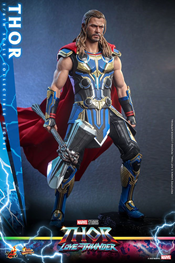
The above image depicts a figurine made by Hot Toys
Based in Hong Kong, Hot Toys is a company that has won praise from all around the world for its superb craftsmanship and creation of upscale collector figurines. Since its founding in 2000, Hot Toys has been associated with unmatched attention to detail and a steadfast dedication to producing lifelike replicas of well-known figures from motion pictures, video games, and other popular culture franchises. With a focus on 1/6th scale figurines, which stand around 12 inches tall, Hot Toys has distinguished itself in the collectibles market by meticulously and accurately replicating character likenesses. These figures are more than just toys; they are elaborate pieces of art that appeal to collectors and enthusiasts all around the world.
Hot Toys has been successful in obtaining licences for a wide range of intellectual properties, such as Star Wars characters and superheroes from Marvel and DC. The realistic facial characteristics, finely made outfits, and extensive accessory selection of the company’s figurines elevate the collection experience to a whole new level. Due to the superior quality and craftsmanship of their products, Hot Toys has become a market leader in the premium collectibles industry. Many of the figures have complex articulation, which enables them to assume a range of dynamic poses. Some even use cutting-edge technologies, including LED lighting, to enhance realism. As a brand, Hot Toys has developed a devoted following and established itself as a standard for excellence in the collectible figure market. Due to the company’s dedication to quality, inventiveness, and skill in creating three-dimensional versions of well-known characters, Hot Toys has become a highly sought-after brand among enthusiasts and collectors worldwide.
A trademark that expressly explains a quality, feature, attribute, or aspect of the products or services it represents is known as a descriptive trademark. Descriptive trademarks provide information about the nature, purpose, or characteristics of the related goods or services, in contrast to whimsical or random trademarks, which are naturally distinctive and have no link to the products or services. Trademarks that are descriptive in nature might explain the components, attributes, purposes, intended usage, or other features of the goods or services. They provide details about the products or services they represent and make use of terms or expressions that highlight an aspect or feature of the product. Generally speaking, they are thought to have less intrinsic distinctiveness than arbitrary or suggestive trademarks.
Stated differently, they are unlikely to be instantly recognisable and exclusively linked to one source. Descriptive trademarks frequently require “acquired distinctiveness” or “secondary meaning” in order to be given protection. This indicates that the phrase becomes distinctive in the minds of consumers as they gradually come to link it with a certain provider of goods or services. It might be difficult to register a simply descriptive trademark since trademark authorities frequently need proof of acquired distinctiveness before allowing registration. Intensive use, marketing initiatives, and consumer recognition are a few examples of this evidence. Frequently, descriptive trademarks are made up of everyday terms or expressions that provide specific details about the good or service. Due to this, it could be challenging for one business to maintain exclusive use of certain phrases. Terms like “Super Soft” for blankets, “Quick Print” for printing services, or “All-Natural” for food goods are a few examples of descriptive trademarks. These phrases provide pertinent product or service information right away. Therefore, stronger, more distinctive marks are typically easier to protect and enforce, hence, it is crucial for businesses to be aware of the distinctiveness of the trademarks they have chosen. Descriptive marks can be registered and protected, but maintaining their exclusivity in the marketplace frequently takes more work.
One may argue that “Hot Toys” is suggestive and indirectly descriptive even though it may not be intrinsically descriptive in the sense of clearly communicating details about the features or physical attributes of the products. One could interpret the word “Hot” in “Hot Toys” as implying anything about the collectible figures’ popularity, quality, or desirability. It suggests that these toys are in great demand, trendy, or of excellent quality, which could lead to a link with their status as extremely desirable and well-liked products. The definition of “Hot” is ambiguous and subjective. Although it doesn’t specifically list a physical feature of the toys, it may be interpreted to imply a particular degree of excitement, desirability, or trendiness related to the items. Customers may eventually grow to identify the term “Hot Toys” with a particular standard of quality, collectibility, or trendiness as a result of widespread usage and marketing initiatives. This might help the term take on a secondary meaning, which is important for trademark protection. In cases where the corporation engages in aggressive marketing to position its items as innovative, highly desirable, or in-demand, the term “Hot Toys” could be seen as a tactic employed to project an air of exclusivity and appeal. Although the terms “Hot” and “Toys” are widely used, the combination “Hot Toys” for a company that deals with collector figures is a little unusual. The combination itself could allude to a particular appeal or level of market popularity without specifically describing the toys’ physical characteristics. Positive customer evaluations and feedback that link the term “Hot Toys” to attributes like trendiness, attractiveness, or desirability may be used as proof that customers regard the trademark in a descriptive manner.

The above image depicts a figurine made by Hot Toys
The word “Hot Toys” may have gained secondary meaning and be eligible for trademark protection if it has been used extensively and exclusively by the company for a considerable amount of time and customers have come to identify it principally with the products of this specific company. It’s crucial to remember that legal interpretations and the particular circumstances of a trademark’s use may determine whether or not it is descriptive. Evidence of market positioning and consumer perception would probably be relevant in court to determine whether “Hot Toys” is seen as descriptive and, if so, whether it has taken on secondary meaning.
Clear information regarding the nature, traits, or attributes of the goods or services may be found in a descriptive trademark. It may make it simpler for customers to comprehend the offerings by communicating to them the core values of the brand. Since the trademark is descriptive, customers could have certain expectations about the good or service. When it comes to “Hot Toys,” buyers may anticipate collectible figures that are in style, in high demand, or both. A company with a descriptive trademark may stand out in a market where competitors use names that are less descriptive or more generic by instantly expressing information about their products. If the descriptive term is in line with good consumer attitudes, then this distinction might be beneficial.
Using a descriptive trademark helps simplify marketing communications. Given that the trademark itself conveys important information, the company might not need to put as much effort into teaching customers about the nature of its products. Trademarks that are descriptive may not be entirely exclusive. So much so, that preventing competitors from marketing their items with identical descriptive terms may prove to be more difficult. The brand’s capacity to carve out a distinct personality in the marketplace may be hampered by this restriction. Strong brand loyalty may result if a descriptive trademark gradually takes on secondary meaning and becomes predominantly associated with a certain source among customers. Due to favourable associations and experiences, consumers may select products having the descriptive trademark. Descriptive trademark registration and protection can be more difficult.
In order to obtain legal protection, the brand might have to provide proof of acquired distinctiveness, such as extensive usage, advertising, and consumer recognition. Adding more products to a particular category may be possible with a descriptive trademark. For instance, “Hot Toys” could be able to introduce different kinds of collectibles without going too far from its descriptive character if it had initially concentrated on action figures. Customers’ opinions of the descriptive phrase may change over time. Positive associations and the brand’s positioning in the market can be strengthened if the brand successfully fulfils the promises made by the descriptive trademark. However, if they are frequently employed to characterise a class of products, they can run the risk of becoming generic words. Over time, this might lessen the uniqueness of the brand. It is imperative that organisations utilising descriptive trademarks systematically oversee their positioning, marketing, and legal endeavours in order to effectively traverse and capitalise on the advantages that come with this particular trademark category.
The development of the brand, its international expansion, and the distinct niche it has carved out for itself in the collectibles market are all entwined with the voyage of the “Hot Toys” trademark. The following illustration explores the origins and significance of the “Hot Toys” trademark, highlighting how it shaped the impression of the brand among consumers.
Establishment of Hot Toys
⬇️
Howard Chan established Hot Toys Limited in Hong Kong in 2000. The company’s first product line was 1/6th scale military-themed figures, but it later expanded to include pop culture and movie-related memorabilia.
Trademark Registration
⬇️
It is likely that Hot Toys filed its trademark “Hot Toys” in order to safeguard its products and brand identification. A trademark is legally protected after it has been registered by submitting an application to the appropriate intellectual property offices and having it approved.
Global Expansion
⬇️
Hot Toys became well-known and well-recognized worldwide for their exquisitely detailed collectible figures. The business obtained licences for a number of well-known properties, including as Marvel, DC, Star Wars, and other motion pictures and video games.
Evolution of the Brand
⬇️
Hot Toys has been improving the quality of its figurines’ intricacy and honing its production methods for years. They gained recognition for its dedication to precision, articulation, and realism in character likeness representation.
Marketing and Promotion
⬇️
In order to raise brand awareness and draw in collectors, Hot Toys undertook an elaborate marketing and advertising campaign. This undoubtedly included collaborating with others, attending industry events, and implementing both offline and online marketing techniques.
Trademark Protection and Challenges
⬇️
Owing to the “Hot Toys” brand’s distinctiveness and originality, the business surely encountered difficulties and possible infringement problems over time. In order to safeguard trademarks, one must keep an eye out for any unauthorised use of identical marks on the market and, if required, take legal action.
Consumer Reception:
⬇️
The popularity and favourable reviews that Hot Toys’ goods received from fans and collectors probably helped to fortify the company and its trademark.
If a trademark is overly descriptive, trademark offices may initially reject to register it. This is so because the main goal of trademark law is to safeguard distinguishing marks that allow for the unique identification of the source of products or services. In cases where a trademark is first deemed descriptive, the brand could have to prove that the mark has evolved into a secondary meaning over time. This indicates that rather than the mark’s descriptive meaning, customers now predominantly identify it with a particular provider of goods or services. If descriptive trademarks are commonly used to characterise a class of goods or services, they may run the risk of turning into generic names. This can result in a decline in uniqueness and possible difficulties upholding exclusive rights.
Competitors may contest the legality of a descriptive trademark on the grounds that it forbids them from utilising colloquial language to describe their own goods or services. Enforcing a descriptive trademark can be difficult since the mark’s owner may have to prove that other companies are using it in a way that confuses consumers or lessens its uniqueness. Laws and practises pertaining to trademarks differ between jurisdictions. Depending on the unique legislative framework of each nation where the trademark is registered or utilised, legal disputes pertaining to descriptiveness may take different forms. It’s crucial to remember that legal issues can change over time and that new difficulties could appear.
If the trademark office had initially deemed the “Hot Toys” trademark to be descriptive, Hot Toys may have needed to present proof of acquired distinctiveness in order to be granted registration. This could be demonstrated by widespread use, aggressive marketing campaigns, and consumer recognition. It can be harder to enforce a descriptive trademark than a highly unique one. Hot Toys might have to provide evidence that competitors are utilising the mark in a way that confuses customers or lessens its uniqueness. Due to Hot Toys’ products’ success and appeal, buyers may come to think of “hot toys” as an umbrella term for premium collectible figurines. The trademark’s uniqueness and exclusivity would be at danger as a result.
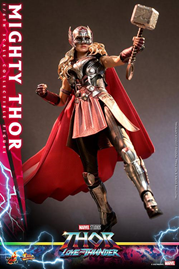
The above image depicts a figurine made by Hot Toys
Given its international reach, Hot Toys may encounter distinct legal requirements in the many regions in which it conducts business. Different trademark laws provide different levels of protection for descriptive marks. The corporation may utilise defensive tactics, such as keeping an eye out for possible infringing uses, delivering cease-and-desist letters, or taking legal action against competitors who use marks that are similar, to defend the “Hot Toys” trademark. The trademark’s descriptiveness may vary if Hot Toys has changed its business emphasis or increased the range of products it offers. The business would have to modify its legal tactics appropriately. In order to guarantee that consumers identify the “Hot Toys” mark with its particular brand and not just as a designation for well-liked or sought-after collectibles, Hot Toys could need to make ongoing investments in marketing campaigns.
A trademark’s descriptive quality, such “Hot Toys,” might affect registration issues, enforcement tactics, and protection plans, among other legal matters. During the registration procedure, descriptive trademarks frequently encounter difficulties since trademark offices may initially reject them due to their intrinsic lack of distinctiveness. For Hot Toys to get beyond this obstacle, they could have needed to show proof of acquired distinctiveness. It can be harder to enforce a descriptive trademark than a highly unique one. Hot Toys might have to prove that comparable words used by competitors confuse customers or lessen the mark’s uniqueness. Competitors may contend that they are unable to describe their own items in common English due to the mark’s descriptive nature.
This might result in legal disputes where Hot Toys would have to weigh its exclusive rights against the justifiable uses of competitors. The phrase “Hot Toys” may eventually come to refer to any high-quality collectible figurine due to the popularity of the “Hot Toys” brand. The exclusivity of the trademark is at stake because of this, and Hot Toys would have to take proactive measures to combat genericide through marketing and legal defence. It was probably necessary for Hot Toys to prove that the name had taken on a secondary meaning and that people now predominantly connect “Hot Toys” with its merchandise. This could entail consumer surveys, marketing initiatives, and the presentation of long-term use data. Since the trademark is descriptive, customers may have certain expectations about the type, popularity, or calibre of the goods.
If competitors use comparable descriptive language that could cause misunderstanding, legal challenges might arise. Every jurisdiction has a different trademark law. When pursuing international protection, Hot Toys must handle these variances since other legal systems may interpret the mark’s descriptiveness differently. Legal measures can include ongoing advertising and educational initiatives to strengthen the mark’s connection to particular Hot Toys items. This is essential to preserving the trademark’s uniqueness. In order to defend the trademark, Hot Toys might need to take proactive defensive measures like keeping an eye out for possible infringing usage in the market, delivering cease-and-desist letters, and taking legal action as necessary. In conclusion, there are opportunities and obstacles in the legal sphere due to the descriptive nature of the “Hot Toys” trademark. Although it establishes standards for customers, maintaining exclusivity and protecting against possible genericization or infringement by competitors calls for constant work. The legal strategy needs to be flexible, taking into account shifts in the global legal landscape, consumer perception, and the market.
A key factor in brand positioning, market presence, and overall business success, the “Hot Toys” trademark has a substantial impact on a number of Hot Toys’ business tactics. The “Hot Toys” trademark is an effective means of promoting brand awareness. It sets Hot Toys’ products apart from competitors in the very competitive collectibles industry. The trademark’s distinctiveness aids Hot Toys in creating a distinct identity and encouraging difference. Consumer trust is bolstered by the trademark’s descriptive nature, which implies popularity and desirability. Customers might identify the “Hot Toys” brand with premium, highly sought-after collectibles, which would encourage repeat business and brand loyalty. The trademark has a direct impact on Hot Toys’ positioning and marketing plans.
Since the word “Hot” connotes trendiness and demand, Hot Toys is able to market its items as being at the forefront of the collectibles industry and in high demand. Positive connotations with the brand probably have an impact on licence acquisition, allowing Hot Toys to produce figurines based on well-known figures from video games, comic books, and films. The uniqueness of the trademark adds to the impression that Hot Toys’ goods are exclusive. Due to its exclusivity and the inferred quality connected with the trademark, Hot Toys is able to charge more for their figures, targeting a specific group of collectors who can afford to buy expensive figures. The “Hot Toys” brand’s success offers a solid platform for company growth.
Positive connotations with the trademark probably have an impact on decisions to diversify the product line by adding additional figures, accessories, and collectibles to satisfy changing consumer wants. The “Hot Toys” trademark requires careful defence and protection tactics. Hot Toys needs to take proactive measures to prevent any potential infringement or genericide due to its descriptive character. Maintaining the trademark’s strength and exclusivity requires both legal tactics and enforcement measures. In order to maintain its trademark, Hot Toys needs to make sure that all of its products meet or beyond the implied qualities. Keeping up with customer expectations is crucial to preserving brand credibility.
It facilitates market access and cultivates a worldwide community of collectors who are aware of and confident in the “Hot Toys” brand by offering a dependable and unified brand identification throughout international marketplaces. Hot Toys’ ability to react quickly to market trends is influenced by the trademark’s relationship with popularity and trendiness. By using the trademark, the business can remain aware of customer preferences and quickly modify its product line to meet the needs and interests of the market. Essentially, Hot Toys’ business tactics are based on the “Hot Toys” trademark, which shapes brand creation, marketing choices, and the company’s general approach to product development and market placement in the collectibles industry. The company’s sustained success and market prominence are largely attributable to the meticulous management and leveraging of the trademark.
In summary, the “Hot Toys” trademark is descriptive by nature, implying attributes like high demand, trendiness, and popularity for the collector figurines. This descriptive word shapes consumer expectations around things that are deemed cutting-edge in the collectibles market by implying a particular level of excitement and desirability. Even though the process of registering a trademark has proven difficult, “Hot Toys” uniqueness adds to the impression of the brand’s exclusivity and builds brand loyalty. The necessity for proof of acquired distinctiveness and an active defence against possible genericide or similar usage by competitors are two legal factors pertaining to this descriptive trademark. Notwithstanding these difficulties, the “Hot Toys” trademark has gained widespread recognition on a global scale, giving the company’s upscale collectibles a dependable and identifiable identity and enabling it to adjust to changing market trends.
Comments are closed